
Carver Bean
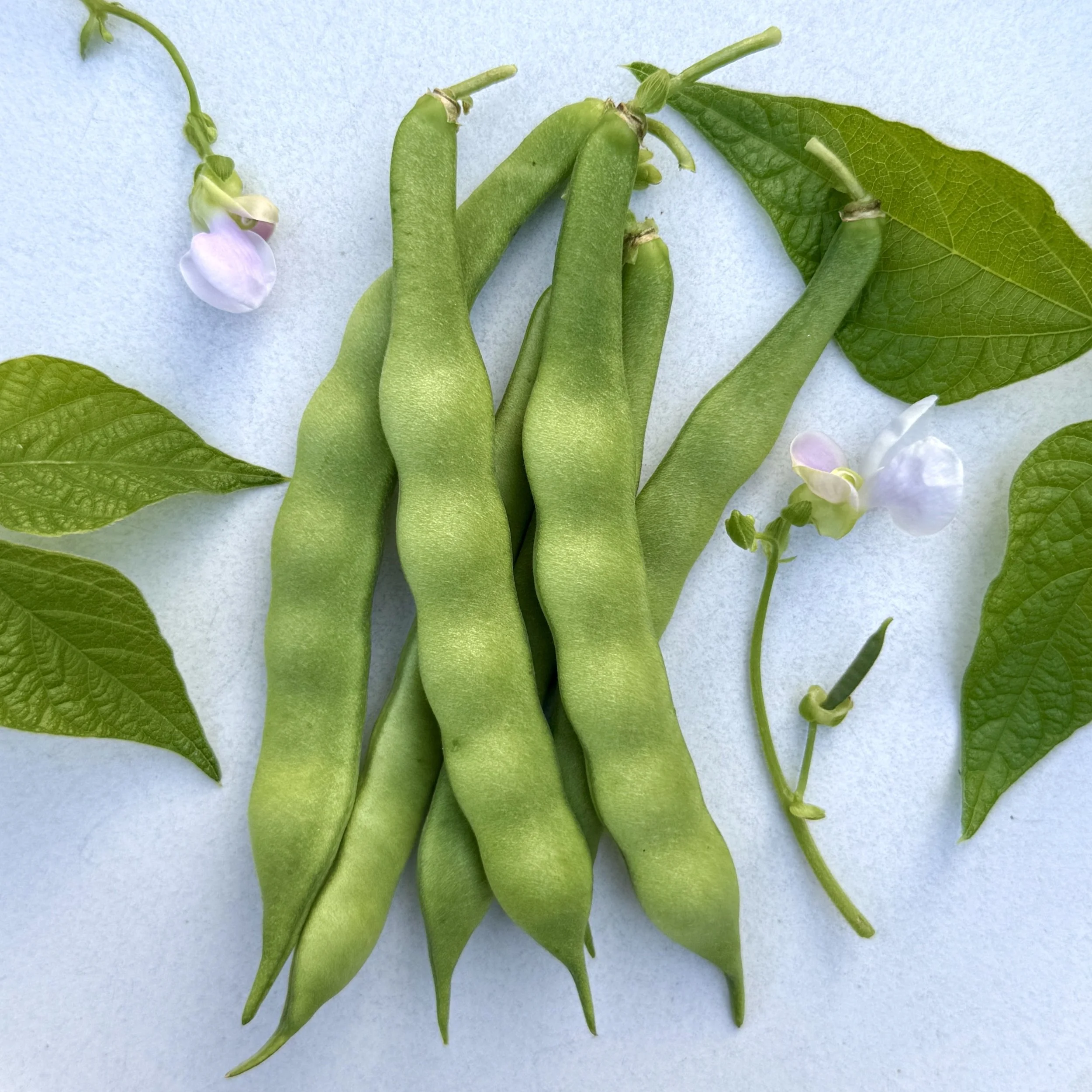
This heirloom snap bean stands out for its exceptional yield and flavor, yet its origin remains something of a mystery. While we typically avoid sharing varieties without an interesting story to tell about them, the lack of a story is precisely what drew us to the Carver bean.
When Alison Magill of the Piscataqua Seed Project first shared these seeds with us, their uniquely plump shape immediately caught our attention for its striking resemblance to the ancient True Red Cranberry bean of Abenaki fame. If the two were related, Alison’s seeds may just be the last remnants of a lost New England heirloom. Yet the only thing known of their history was the name of the man who grew them: Jack Carver of Epping, NH.
In the 1970s, many Epping locals knew this variety simply as “Jack’s beans” and some still remember it fondly today. Among Jack’s surviving friends and family, each gave us a different account of the Carver bean’s origin. One recalls them being grown in New Hampshire since before the Civil War, another suggested that Jack obtained his seeds somewhere in the Midwest, and a third believed they were passed down by Jack’s father, who grew them at his home in Milo, Maine.
That’s where the paper trail ended unfortunately, but when word of this reached the team at UNH’s Hubbard Center for Genome Studies, they took interest and offered to conduct a genetic test of the Carver bean and its suspected relatives, in hopes that a close match could help us learn more of its origin (results coming soon).
The story of the Carver bean is still unfolding, and its full history may never be known, but we’re certainly working hard to figure it out. Why? Because without a good story, the world would forget all about Jack’s beans (and they’re way too tasty to let that happen).
Last Grown in 2025